Dr. Swati Mhaske's Jija Clinic
Expert Obstetrician & Gynecologist in Pimple Saudagar
10+ years of compassionate care for pregnancy, PCOS/PCOD, fertility & women's health. Consult now — appointments open Mon–Sat, 10 AM to 8 PM.
Pregnancy Diet : What to Eat & What to Avoid for a Healthy Pregnancy ?
The moment a woman announces she’s pregnant in India, the advice starts pouring in — eat this, don’t eat that, have ghee, avoid papaya. It’s no wonder so many of my patients feel confused about what’s actually safe. So let me simplify it for you. A healthy pregnancy diet isn’t about “eating for two” or eating more — it’s about eating right. In this guide, I’ll walk you through the key nutrients your body needs, the best foods to enjoy, the ones to avoid, and the truth behind some common myths.
Why a good pregnancy diet matters
Whatever you eat is your baby’s main source of nourishment, so your plate quite literally shapes your baby’s growth. A balanced diet supports your baby’s brain, bones, and organs, keeps your own energy and health strong, and helps reduce common problems like anaemia and gestational diabetes — both of which are especially common among Indian mothers.
Key nutrients your body needs (and Indian sources)
A few nutrients deserve special attention during pregnancy:
- Folic acid — vital in early pregnancy to prevent neural tube defects. Found in spinach (palak), lentils (dal), chickpeas, beetroot, and citrus fruits.
- Iron — expands your blood supply and prevents anaemia. Found in spinach, dates, jaggery, lentils, and ragi. Pair with vitamin C (amla, orange) to absorb it better.
- Calcium — builds your baby’s bones and teeth. Found in milk, curd, paneer, ragi, and sesame.
- Protein — the building block of your baby’s growth. Found in dal, eggs, paneer, sprouts, and well-cooked chicken or fish.
- Healthy fats (omega-3) — support brain development. Found in nuts, flaxseeds, and (in moderation) ghee.
- Fibre — eases the constipation so common in pregnancy. Found in whole grains, millets, fruits, and vegetables.
Best foods to eat during pregnancy
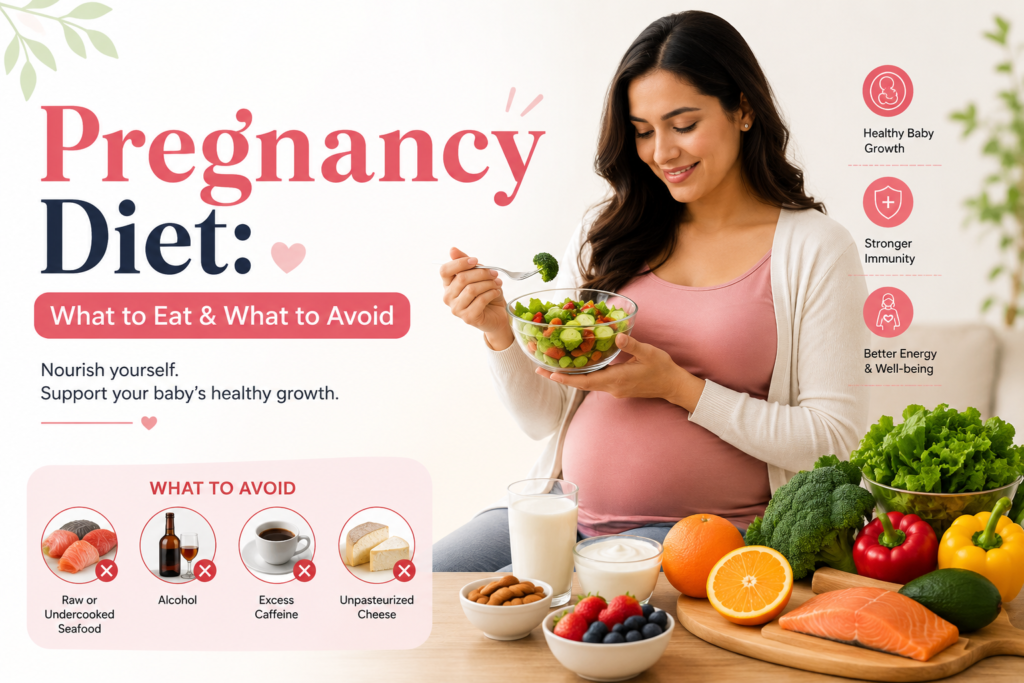
Aim for a colourful, balanced plate. Wonderful options include fresh fruits (banana, guava, apple, orange), plenty of vegetables and greens, whole grains and millets (ragi, oats, whole wheat), dairy (boiled milk, curd, paneer), protein sources (dal, eggs, sprouts, well-cooked chicken or fish), and nuts and seeds (soaked almonds, walnuts, dates). Indian superfoods like ragi, moringa (drumstick leaves), and amla are excellent, and coconut water (nariyal pani) is a lovely way to stay hydrated. Try to eat small, frequent meals to keep your energy steady.
Foods to avoid during pregnancy
For your safety and your baby’s, it’s best to avoid or limit:
- Raw or unripe papaya, which can trigger contractions (ripe papaya in moderation is generally fine)
- Pineapple in the first trimester, in large amounts
- Raw or undercooked meat, eggs, and seafood, which may carry harmful bacteria
- Unpasteurised or unboiled milk and dairy
- High-mercury fish such as shark, swordfish, and king mackerel
- Excess caffeine — limit tea and coffee to about one cup a day
- Alcohol — best avoided completely
- Deep-fried, junk, and heavily processed foods, and street food, for hygiene and health reasons
- Aerated and sugary drinks, which add empty calories and raise gestational diabetes risk
“Eating for two”? Busting diet myths
Let me clear up a few things I hear all the time. First, the biggest one: you are not “eating for two.” Your calorie needs rise only modestly — roughly 300 extra calories a day in the second trimester and a little more in the third. Quality matters far more than quantity. Second, ripe mango, papaya, and pineapple in moderation are generally safe — it’s the raw or unripe forms to avoid. Third, a well-planned vegetarian diet can absolutely meet your needs. And finally, please don’t fast during pregnancy, and don’t let traditional “hot food/cold food” beliefs override sound, balanced nutrition.
The role of supplements
Even with a good diet, prenatal supplements matter — particularly folic acid and iron, which are difficult to get in sufficient amounts from food alone. Please take these exactly as I prescribe them, and never self-prescribe high-dose vitamins, as excess of some (like vitamin A) can harm your baby.
Tips for common pregnancy discomforts
Food can help with the little struggles too. For morning sickness, try small frequent meals, ginger, and vitamin B6-rich foods like bananas. For constipation, increase fibre and water. For heartburn, especially later in pregnancy, go easy on spicy and oily foods.
When to consult your doctor
Please reach out if you have severe vomiting and can’t keep food down, signs of dehydration, severe stomach pain, or any bleeding or spotting. And do talk to me if you’d like a diet plan tailored to your body, your trimester, and any conditions like anaemia or diabetes.
Personalised pregnancy care at Jija Clinic
Every pregnancy is unique, and so is every mother’s nutritional need. At Jija Clinic in Pimple Saudagar, I provide complete maternity care including personalised diet and nutrition guidance, so you can nourish yourself and your baby with confidence at every stage.
📞 Book a consultation: +91 88880 14112 · Dr. Swati Mhaske — Jija Clinic, Pimple Saudagar, Pune
Frequently Asked Questions
- What should I eat during pregnancy?
Focus on a balanced plate of fruits, vegetables, whole grains and millets, dairy, protein (dal, eggs, paneer), and nuts, with plenty of fluids. Small, frequent meals work best. - Which fruits should I avoid during pregnancy?
Avoid raw or unripe papaya and large amounts of pineapple, especially in the first trimester. Most ripe fruits in moderation are safe and healthy. - Is it true I should “eat for two”?
No. Calorie needs rise only modestly — about 300 extra calories a day in the second trimester. Eating right matters far more than eating more. - Can I follow a vegetarian diet during pregnancy?
Yes. A well-planned vegetarian diet meets pregnancy needs. Include dal, paneer, tofu, nuts, and seeds, and take supplements like B12 and iron as advised. - How much water should I drink during pregnancy?
Aim for around 8–10 glasses a day, along with coconut water and fresh fluids, to support digestion and maintain amniotic fluid. - Do I still need supplements if I eat well?
Yes. Folic acid and iron are hard to get enough of from food alone and are important for your baby, so take them as prescribed. - Can I eat spicy food during pregnancy?
In moderation, yes, if it suits you — but heavily spicy and oily foods can worsen heartburn, especially in later pregnancy.