Dr. Swati Mhaske's Jija Clinic
Expert Obstetrician & Gynecologist in Pimple Saudagar
10+ years of compassionate care for pregnancy, PCOS/PCOD, fertility & women's health. Consult now — appointments open Mon–Sat, 10 AM to 8 PM.
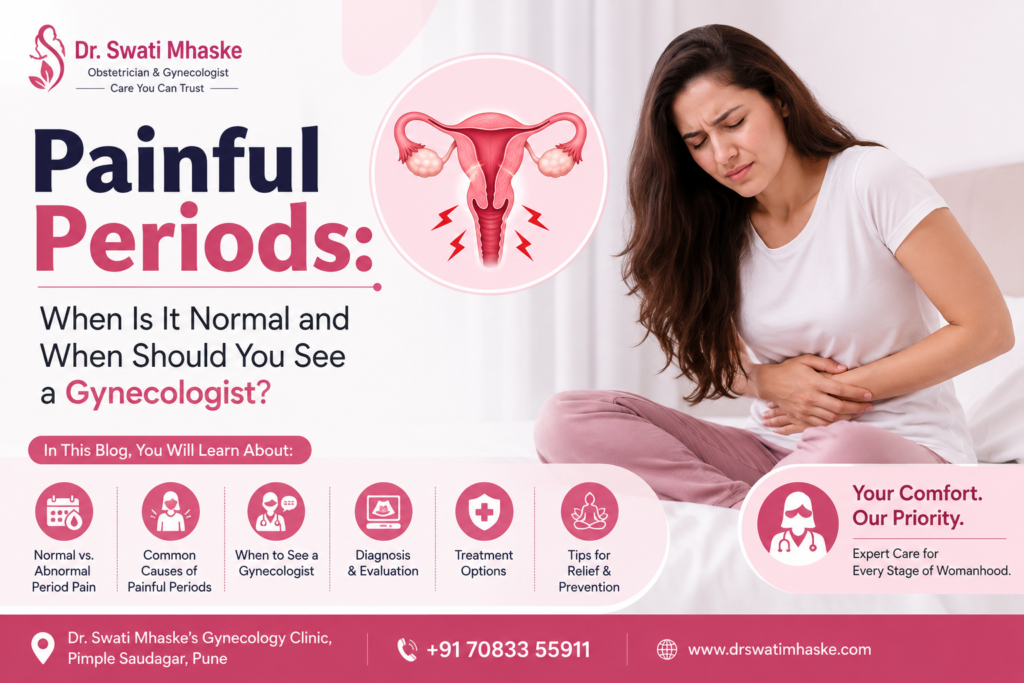
For many women, painful periods are a part of their monthly routine. Mild cramping during menstruation is common and usually isn’t a cause for concern. However, if the pain is severe enough to interfere with your daily activities, work, or school, it may be a sign of an underlying gynecological condition that requires medical attention.
Ignoring severe menstrual cramps can delay the diagnosis of conditions such as endometriosis, adenomyosis, fibroids, or pelvic infections. Understanding what’s normal and when to seek professional care can help protect your reproductive health and improve your quality of life.
In this blog, we’ll discuss the causes of painful periods, warning signs to watch for, and when it’s time to consult a gynecologist.
What Are Painful Periods?
Painful periods, medically known as dysmenorrhea, refer to cramping pain in the lower abdomen that occurs before or during menstruation. Some women may also experience pain in the lower back, thighs, or pelvis.
The discomfort usually begins a few hours before the period starts or on the first day of menstruation and may last for one to three days.
While mild cramps are considered normal, severe pain that repeatedly disrupts your daily life should never be ignored.
What Causes Menstrual Cramps?
During menstruation, the uterus produces hormone-like substances called prostaglandins. These chemicals cause the uterus to contract so it can shed its lining.
Higher levels of prostaglandins can lead to stronger uterine contractions, resulting in more intense pain and cramping.
For many women, these cramps improve with age or after childbirth. However, persistent or worsening pain may indicate another health condition.
When Are Painful Periods Considered Normal?
Mild to moderate menstrual cramps are generally considered normal if they:
- Begin shortly before or on the first day of your period.
- Improve within one to three days.
- Respond to rest, heating pads, or over-the-counter pain relief.
- Do not interfere with your normal routine.
Occasional discomfort is common and usually does not indicate a serious medical problem.
When Should You Be Concerned About Severe Menstrual Cramps?
You should consult a gynecologist if your severe menstrual cramps:
- Prevent you from attending work, school, or daily activities.
- Continue for several days every month.
- Become progressively worse over time.
- Do not improve with pain medication.
- Occur along with heavy menstrual bleeding.
- Are associated with pain during intercourse.
- Cause difficulty passing urine or bowel movements.
- Occur between menstrual cycles.
Persistent pain often requires further evaluation to identify the underlying cause.
Common Causes of Painful Periods
- Endometriosis
Endometriosis occurs when tissue similar to the uterine lining grows outside the uterus. It commonly affects the ovaries, fallopian tubes, and pelvic tissues.
Symptoms include:
- Severe menstrual cramps
- Pain during intercourse
- Heavy periods
- Difficulty conceiving
Early diagnosis is important to preserve fertility and improve quality of life.
- Adenomyosis
In adenomyosis, the tissue lining the uterus grows into the muscular wall of the uterus.
This condition can cause:
- Heavy menstrual bleeding
- Severe cramping
- Pelvic pressure
- Enlarged uterus
It is more common in women over 35 but can occur at younger ages as well.
- Uterine Fibroids
Fibroids are non-cancerous growths within the uterus. Depending on their size and location, they may cause:
- Painful periods
- Heavy bleeding
- Pelvic pain
- Frequent urination
- Pressure symptoms
Many fibroids can be treated without removing the uterus.
- Pelvic Inflammatory Disease (PID)
PID is an infection affecting the female reproductive organs. It may cause:
- Pelvic pain
- Fever
- Painful periods
- Pain during intercourse
- Unusual vaginal discharge
Prompt treatment helps prevent complications such as infertility.
- Ovarian Cysts
Some ovarian cysts may cause pain, especially during menstruation or ovulation. Most cysts resolve on their own, while others may require treatment.
- Cervical Narrowing
In some women, a narrow cervical opening can make menstrual flow more difficult, increasing pressure inside the uterus and causing painful cramps.
Risk Factors for Severe Menstrual Cramps
You may be more likely to experience painful periods if you:
- Started menstruating at an early age.
- Have a family history of painful periods.
- Smoke cigarettes.
- Experience heavy menstrual bleeding.
- Have irregular menstrual cycles.
- Have never been pregnant.
Knowing these risk factors can help you discuss symptoms more effectively with your doctor.
How Are Painful Periods Diagnosed?
Your gynecologist will begin by discussing your symptoms, menstrual history, and overall health.
Additional investigations may include:
- Pelvic examination
- Pelvic ultrasound
- Blood tests
- MRI (in selected cases)
- Laparoscopy for suspected endometriosis
Accurate diagnosis allows for targeted treatment and better long-term outcomes.
Treatment Options for Painful Periods
Treatment depends on the underlying cause and severity of symptoms.
Your gynecologist may recommend:
Medications
- Anti-inflammatory pain relievers
- Hormonal contraceptives
- Hormonal therapy
Lifestyle Measures
- Applying a heating pad
- Regular physical activity
- Stress management
- Adequate sleep
- Eating a balanced diet
Minimally Invasive Procedures
If conditions such as fibroids, ovarian cysts, or endometriosis are present, laparoscopic surgery may be recommended to relieve symptoms while preserving fertility whenever possible.
Can Painful Periods Affect Fertility?
Not all painful periods affect fertility. However, certain conditions associated with severe menstrual cramps, such as endometriosis, pelvic inflammatory disease, or adenomyosis, may reduce fertility if left untreated.
Early evaluation and treatment can help protect reproductive health and improve pregnancy outcomes.
Tips to Manage Menstrual Pain Naturally
While medical treatment is important when needed, these healthy habits may help reduce mild menstrual discomfort:
- Exercise regularly.
- Stay hydrated.
- Eat foods rich in iron, calcium, and magnesium.
- Limit caffeine and processed foods during your period.
- Apply a warm heating pad to your lower abdomen.
- Practice yoga, meditation, or breathing exercises to reduce stress.
If pain persists despite these measures, consult a gynecologist rather than relying solely on home remedies.
When Should You Visit a Gynecologist?
Schedule an appointment if:
- Your menstrual pain suddenly becomes severe.
- Pain medication no longer provides relief.
- You experience unusually heavy bleeding.
- You have bleeding between periods.
- Pain occurs even when you’re not menstruating.
- You’re having difficulty becoming pregnant along with painful periods.
Seeking medical care early can lead to faster diagnosis and more effective treatment.