Dr. Swati Mhaske's Jija Clinic
Expert Obstetrician & Gynecologist in Pimple Saudagar
10+ years of compassionate care for pregnancy, PCOS/PCOD, fertility & women's health. Consult now — appointments open Mon–Sat, 10 AM to 8 PM.
AA Cesarean section (C-section) is a surgical procedure used to deliver a baby through incisions made in the mother’s abdomen and uterus. While many pregnancies result in vaginal births, a C-section may be the safest option for the mother, the baby, or both.
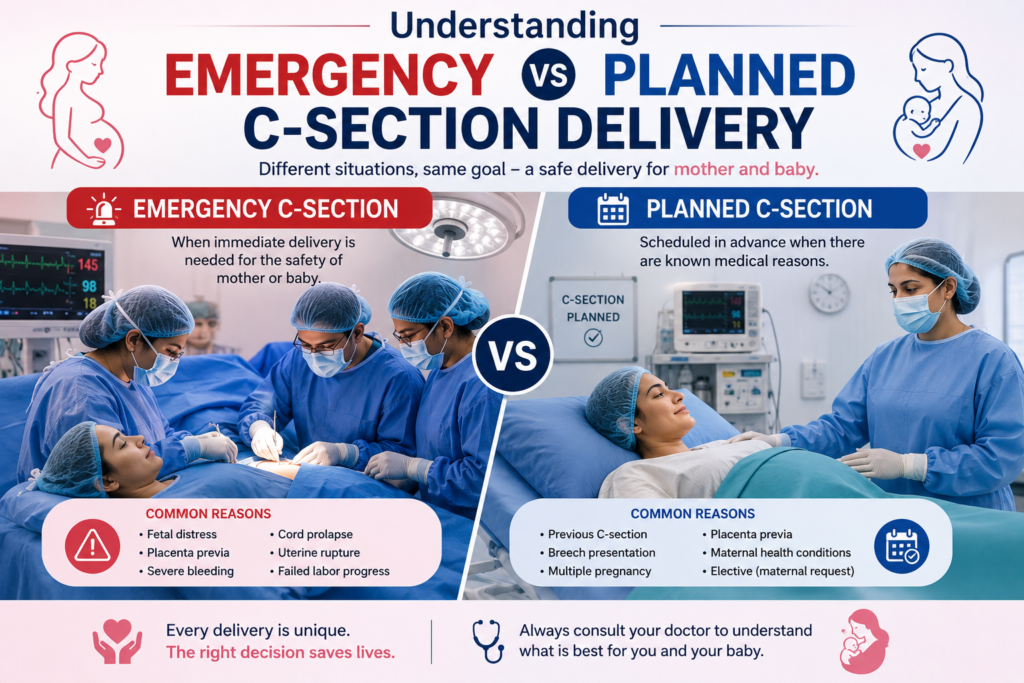
C-sections are generally categorized into planned (elective) and emergency procedures. Understanding the differences between these two types can help expectant parents feel more informed and prepared for childbirth.
What Is an Emergency C-Section Delivery?
An emergency C-section is performed when unexpected complications arise during pregnancy or labor, making immediate delivery necessary to protect the health of the mother or baby.
Common Reasons for an Emergency C-Section
- Fetal distress (changes in the baby’s heart rate)
- Labor not progressing
- Umbilical cord prolapse
- Placental abruption
- Excessive maternal bleeding
- Uterine rupture (rare)
- Severe pregnancy-related high blood pressure (preeclampsia)
Emergency C-sections are performed quickly to reduce the risk of serious complications.
Planned vs Emergency C-Section: Key Differences
Feature | Planned C-Section | Emergency C-Section |
Timing | Scheduled before labor | Performed during labor or due to sudden complications |
Preparation | Planned in advance | Limited preparation due to urgency |
Reason | Known medical condition | Unexpected medical emergency |
Stress Level | Usually lower | Often higher because of urgency |
Medical Team | Scheduled specialists | Immediate emergency response team |
Recovery | Often smoother | May vary depending on the emergency |
Benefits of a Planned C-Section
A planned C-section offers several advantages in appropriate medical situations.
Benefits include:
- Scheduled delivery date
- Better preparation for parents
- Reduced risk of prolonged labor
- Lower chance of emergency surgery
- Well-coordinated medical care
- Suitable for specific pregnancy complications
Benefits of an Emergency C-Section
Although unplanned, an emergency C-section can be life-saving.
Benefits include:
- Protects the baby during fetal distress
- Reduces risks from labor complications
- Helps manage excessive maternal bleeding
- Prevents further complications in high-risk situations
- Enables immediate medical intervention
What Happens During a C-Section?
Whether planned or emergency, the procedure generally involves:
- Administration of anesthesia (usually spinal or epidural, though general anesthesia may be needed in some emergencies).
- Cleaning and preparing the surgical area.
- Making an incision in the abdomen and uterus.
- Delivering the baby.
- Clamping and cutting the umbilical cord.
- Delivering the placenta.
- Closing the incisions with stitches or staples.
The procedure typically takes 30–60 minutes, with the baby usually delivered within the first few minutes after the incision.
Recovery After a C-Section
Recovery is similar for both planned and emergency procedures, although women who undergo emergency surgery may need additional monitoring depending on the reason for the operation.
Recovery Tips
- Get plenty of rest.
- Walk gently as advised by your doctor.
- Avoid lifting heavy objects.
- Keep the incision clean and dry.
- Eat a nutritious, protein-rich diet.
- Drink plenty of fluids.
- Take prescribed medications as directed.
- Attend follow-up appointments.
Most women recover within 6–8 weeks, although healing times vary.
Frequently Asked Questions (FAQs)
- What is the difference between a planned and an emergency C-section?
A planned C-section is scheduled before labor due to known medical reasons, while an emergency C-section is performed during labor or pregnancy because of unexpected complications.
- Is a planned C-section safer than an emergency C-section?
Both are safe when medically indicated. Planned C-sections allow more preparation, while emergency C-sections are performed quickly to address urgent situations and protect the mother and baby.
- How long does it take to recover from a C-section?
Most women recover within 6–8 weeks, although recovery varies depending on individual health and the reason for the surgery.
- Can I breastfeed after a C-section?
Yes. Most mothers can begin breastfeeding soon after delivery, depending on their condition and the baby’s health. Hospital staff and lactation consultants can provide support.
- Can I have a normal delivery after a previous C-section?
Many women may be eligible for a Vaginal Birth After Cesarean (VBAC). Your doctor will determine whether it is a safe option based on your medical history and current pregnancy.
- Why is an emergency C-section performed?
An emergency C-section is performed when complications such as fetal distress, prolonged labor, placental abruption, or severe maternal health issues make immediate delivery necessary. - Is a planned C-section less risky than an emergency C-section?
A planned C-section allows for better preparation and may reduce certain risks associated with urgent surgery, but the safest delivery method depends on the mother’s and baby’s medical condition. - How should I prepare for a planned C-section?
Attend prenatal checkups, follow your doctor’s instructions, pack your hospital bag in advance, arrange support at home, and discuss anesthesia and recovery with your healthcare provider. - How long will I stay in the hospital after a C-section?
Many women stay in the hospital for 2–4 days, although the exact duration depends on recovery and any medical complications. - Can an emergency C-section affect future pregnancies?
Most women go on to have healthy future pregnancies after an emergency C-section, but future pregnancy planning should always be discussed with an obstetrician.
Conclusion
Both planned and emergency C-section deliveries are performed with the same goal: ensuring the safety of the mother and baby. A planned C-section allows time for preparation when a medical condition is already known, while an emergency C-section provides rapid intervention when unexpected complications arise.
Understanding the differences between these procedures can help you feel more confident about your childbirth journey. Regular prenatal care, open communication with your obstetrician, and delivering at a trusted maternity hospital can help ensure the best possible outcomes for both you and your baby.